Sunday, 16 April 2017

"Today I close the door to the past. open the door to the future, take a deep breath, step on through and start a new chapter in my life"

Image result for 2017 new beginnings quote I farewell 2016 and say hello to 2017, a new teaching journey, a new beginning and great things to come. It was defiantly sad to farewell my teacher friends at my previous School that I taught at for the last 3 years, but most importantly it was very hard to say good bye to the tamariki (children) that I had taught. It was very emotional and very hard especially knowing that as a teacher I had touched their lives and they had touched my life in some way. I must say that I was also very excited about this new endevour that 2017 was going to bring.

Firstly, I had started my post graduate studies through the Mind lab where I had met a great bunch of teacher friends and I must say I am finding the course very exciting and secondly I had earned me a new full time teaching job teaching a year 3 and 4 class.

So here is my update.....


Image result for update


Welcome to my fantastic and awesome Room 16 Tamariki. What a great bunch of year 3 and 4 students. Majority of my class are from a Maori and Pasifika background. Below is a awesome picture of my class. 


I have really enjoyed working with this year group. At first, I honestly thought that it was going to be hard because for the past 3 years I had been teaching seniors, year 5-6's and it had been a while since I have taught this age group.  So, far this term has been a fantastic term and a very successful term. 
I have build great relationships with the staff at my School and they are like my second family. The staff at School are very welcoming and the School atmosphere is so welcoming. 


I have a build a great relationship with the students in my class where they are happy and feel safe in my classroom. My classroom is full of Aroha and it has been great to see that the Whakatauki's and values that are taught in my class are reflected in the children through their actions. The children in my class are the first to run and help someone that need help, or are feeling sad or down. I can see that they are developing into wonderful citizens. 

During this term I have also been promoted which is fantastic to being a permanent staff member, which is such as wonderful feeling as promotions like these don't come often so I am very blessed and thankful. I can see that the School has definitely seen something special in me which is a great feeling. 

I have also been given the opportunity to be a tutor teacher to a beginning teacher as well as been an associate teacher this term to a third year student teaching. What an opportunity to be able to share all the knowledge I have learnt over these years with these two teachers.  

I must say it has taken a lot of hard work to have got this far. I know wonder what does Term 2 have in store for me? I can't wait to see! 

Image result for quote on dreams came true


Saturday, 25 March 2017

Design thinking: Mind lab session

David Kelley-IDEO: Design thinking.

Be Innovative
(Design thinking kite model)
  • Training and the professional practice of designers-these are principals that can be practiced. 
  • Driven by design involves activities, decisions, and attitudes. 

(Video-Human created design)

Observe and Feel
  • ascertain what it is that they don't do or don't say. 
  • Feeling alongside others and experiencing things as they do. 

(David Kelly-Empathy)
  • What they think and feel. 
  • What they value as a culture. 
4 principals of design thinking (Photo)

Prototype
  • Develop ideas faster.
  • Helps to drive an idea forward.
  • Generate successful feedback. 


Designer thinking challenge 

We have to work alongside someone that we did not know well or have not worked well with before.
Big Idea: "How might you succeed in the online part of your PG learning journey"

1: EMPATHISING

  • Whats the story?
  • Dig deeper
2: DEFINING 
  • Observations about the problem.
  • User story statement. 

3: IDEATING
  • Draw 9 RADICALLY different souluations for your user and capture feedback, comments, reactions. 
4: IDEATING
  • Ideate a new solution. 
5: PROTOTYPING AND TESTING
  • Build something your partner can interact with.
  • Pitch with your user story (Observe your partner and learn more)
  • Swap sheets (Give feedback and feed forward to the designer/s. What did you see, hear, feel? Where to next with this design?
6: REFLECTING


Design thinking in leadership. 

  • Framing problems.

Mindsets


Dilbert-An Early adopter. 


Week 10 Mindlab session


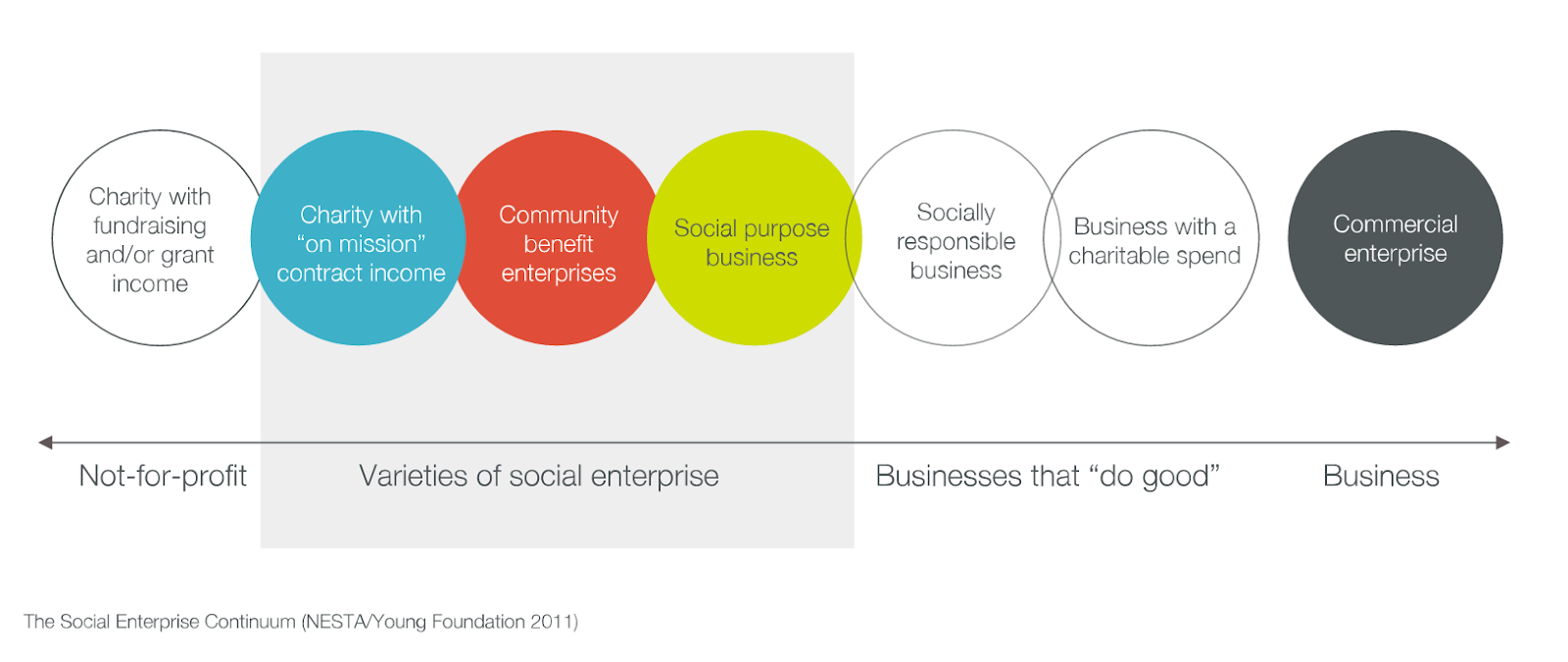
Today during our Mind lab session we firstly talked about what an enterprise is and what an entrepreneur does and who can be one. An entrepreneur is considered a person that is an initiator, a challenger and a driver. Someone that takes a great idea and brings it to life. He/she is the beginning of the venture. These people are usually the people that are the drivers. The person that take charge and is usually the person that will inspire the team to follow. "The entrepreneur is the one that sits in the driver’s seat, and has the ability to change direction, accelerate, slow down or even stop a venture"(Torre, J., & more, R. (2015). Who Is An Entrepreneur?. Entrepreneur. Retrieved 25 March 2017, from https://www.entrepreneur.com/article/245628).


An enterprise can take the form of creating a community and connecting with like minded people. Taking the ideas and creating a business from it.

We then went onto our collaborative task.

Collaborative task:
What are the knowledge, skills and aptitudes these students have developed through enterprise?
What learning happened?
Some of the things that came up were?

Aptitudes: Can do attitude
Skills: Networking promoting the product.
Trial and error.
Having a vision and goal.
Working collaboratively with others.


We then looked at the video below. 
Te Whare Hukahuka
Using mentors. 
Dreams plus plan=Vision

We were then shown an example of Tom's shoes and how the idea started. I found this very amazing. 

We then looked at the method of how to go about collating ideas using lean canvas-Mapping uncertainty.(potential start up vision)


TESTED, VALIDATED OR AMENDED. 

SOCIAL LEAN CANVAS


How do we give better? And how can you accertain this product?
Purpose=The Why? Why are we doing this?What is our purpose. Making sure that it is relevant?
Have the ability to REALLY CHANGE? Challenging the norms. You cant do little things if you cant do little things everyday.

IT IS A JOURNEY!

Sentence stems(Discussion tools for the classroom that would reduce children in groups that clash)
Half bakes.com: Entrepreneurial Improv Theatre"

Digital 2: if you do digital one do a brief overview f digital 2.
You dont have to do digital 1 for digital 2.


Lousise Demsey
Sheena Cameron (resource for reading and writing)


Crowdfunding

Pledge me project website
Engaging a crowd or group for a common goal (crowd sourcing)


Saturday, 24 December 2016

"Look in your heart and write"


Writing is one of my passions and I am always looking at ways that I can inspire and motivate the students in my class, ways that will accelerate their writing and grow their enthusiasm for writing.  One aspect that I have struggled with in my class, is imagination.  How could I get the students to think more creatively  and build their imaginations.

I came across this video on you tube that I really liked. In this video it talked about how the teacher integrates writing into everything on a daily basis. Some of the other key points that I found useful in this video were:

  • Students keep a writers notebook where they can brainstorm and raft ideas which they can then share with the class. 
  • Giving the children the opportunity to share their writing and gain confidence in wanting to share their writing with others. 
  • Giving children the opportunity to give feedback and feed forward on their peers writing. 
  • Work shopping allows children to be able to give and receive feedback effectively. 
  • Talking about what really good writers do. The use of mentored text or exemplars to inspire and motivate children in their writing. 
  • Using books that have really good language such as vivid verbs to inspire children in their writing. 
  • Follow up: Small group explicit instructions giving teacher an opportunity to access weather the children understood the content that she was teaching as a whole class eg: Vivid verbs. 
  • Varying lessons: Whole class, groups and individual lessons. 
  • Success with writing means creating a respectful community of writers: Teacher listening to the students concerns, that the students know that the teacher is there to help them and that we are there to help each other, that we are all learning together: teacher learning from students and vice versa.  
What I really enjoyed the most about this video is when it said that "Teachers need to see themselves as writers too." I think this is very significant. As I love to write, I am always sharing my writing with the children in my class as well as modelling this with my class.  I also show children writing that I can edited, so they can see that a good writer always goes back and re-reads their stories and edits and makes changes where needed to make their writing more powerful and paint a picture in the readers minds. 


Teacher strategies were underpinned by knowing their learners. This doesn’t just mean knowing what they can and can’t do when they write, but what appeals to them, what interests they have, experiences they like to talk about, etc. When these were factored in their learning activities, children were engaged, more confident, and skill development came with the increased mileage and motivation.

I feel this is important. In my classroom I have used realistic context that children can relate to in their writing and writing about what interests them. This keeps the children engaged and motivated. Because my class had a mix of Maori and Pacifica background, I found that the children really enjoyed writing about themselves and their cultures.  Writing was also purposeful and meaningful to the students. 

My classroom was a 1:1 net book class as everything was done digitally. I looked at the different tools that I could use in regards to technology and how I could implement this in writing. 
Some tools that I came up with that I found were very successful.


  • Using story bird to create pieces of poetry, or story book or chapter book on artwork chosen by them. 
  • Using picture prompts as a visual representation where the children can go just about anywhere in their imagination using that picture prompt. 
  • Using Socrative where children could work collaboratively with each other in their writing.  
  • Story maker -This is an interactive tool where the students are able to add characters, backgrounds etc to create their story. 
I am always learning and always looking at new ways of how I can teach creative writing to my students that are engaging and that inspires them and forms their imaginations to grow. I look forward to talking to more teachers as well as researching and professional development on this topic.

I found that growing up I always used to love to write. My ideas would always come from everywhere, from what I felt to what I saw etc that I needed to carry my idea book (thought journal)every where with me. I am really looking forward to implementing this though journal in my class-with the children that I will be working with in 2017. Once the children get into the habit of writing everyday, then their imaginations will keep growing.


Friday, 23 December 2016

"Alone we are smart, together we are brilliant"

This yeah I had the great opportunity to take part in U Learn 2016 in Rotorua. Today, I heard key note speaker Karen Spencer who is the director of Education for NetSafe in New Zealand.
Below I have taken notes about what she talked about during her keynote presentation.


Karen Spencer-Here is the link to Karen Spencers website that you can visit to get more information on her.

So, what now?
  • To be an educator is to yearn to be better...getting better at what we do is part of our DNA. 
  • The craft of teaching would not work without spirit. The spirit isn't enough-METHOD matters. 
  • The ways in which we understand out craft is at the heart of teaching today. 
  • Talk the walk: profession learning. 
  • Professional learning is driven by you....community driven school based professional learning. 
  • A key note: note that is played before the music begins, it sets the key for the song. 


The new #1: Teachers beliefs about their collective ability and efficacy.

This means working collectively. Being together, being networked-that is just the start. Types if conversations that we are having is the most important. I have listed some significant values that Karen Spencer talks about during her presentation.

  1. Immediate values
  2. Potential value: I need an idea...can you help me think about that.
  3. Applied value: Shared learning from you and I take it into a different context. 
  4. Realised value: Have conversations with each other, talking, hearing what they say. 
  5. Re-framing value: Changing an approach, checking what you are saying. 
Look at what your community and your students needs.

  1. Find the urgency-agent areas that the students need the most and start that. 
  2. See the story behind data:  There are stories, lived experiences, seek to hear those stories. 
  3. Embrace discomfort: working collectively, leaning and designing ways to embrace discomfort. 

Hold you ideas lightly: and we play carefully before we introduce anything. 

You have a student in your class who is not participating during class discussion
  • Not understanding the content. 
  • Something has happened before school. 
Look for an alignment with vision for school community and what is happening with your learners. Vision statement should be able to felt, heard, and should be able to be practiced and shown by the students. 
Outcome=vision for your school. 

She showed us this video which I have included below. The video is called" My world, my view". This video talked about disability and inclusion in New Zealand.  So what is Inclusion? This is the action or state of including or being included with a group or structure.  So, what does this mean in terms of Inclusion in Education in New Zealand. " Inclusive education is where all children and young people are engaged and achieve through being present, participating, learning and belonging" (http://www.education.govt.nz/school/running-a-school/inclusive-education). As teachers it is our job to provide these opportunities for these students so that they are able to be confident, successful learners. 


Some key points that came out from this video are:

  • Children know dignity is the key to a strong community. 
  • Everyone should be treated equally. It is about respecting people, respecting each other and their differences. 
  • If we help each other and work together as people rather than individuals it would be a better thing. This is called collaborating-working together. 
  • Every child should be able to live in a world that does not limit them. 
  • Children don't see disability as a barrier to becoming a leader. 
  • Leaders should be people that want to be leaders and that respect everyone no matter if they have disability or not.

See the story behind the data: 
Young people more likely to talk to peers than parents

LISTEN TO YOUR LEARNERS.
Looking at your data and stories together and seeing how you can make a difference, how we as teachers can help these children succeed in their learning. 


EMBRACE DISCOMFORT. 
How we see our world is different to how our colleagues see it. 


The John Cusack Rule
To keep the fear off the set: Look at how proof learning and systems and process allow people to add their views to celebrates differences. 
  1. Compare vision to your learners curriculum.
  2. Let the data open up the empathy and understanding
  3. Walk around your information together.
  4. Agree on your strong signals before you test and trial.


Education doesn't change the world: Education changes people. 
And its people who change the world-Paul frehr. 


Tuesday, 20 December 2016

"First solve the problem, then write the code"-John Johnson

During U learn 2016 I had the great opportunity to head key note speaker John Couch.
John Couch:  “New dimensions in learning”

Rewiring education.
John Couch is the Vice President of Education at Apple, Inc. I have included a link about with more information about the key note speaker. 
Below I have included the notes of the important aspects of his talk. 

Leadership model:
  • Vision-Mental Bicycle
  • Mission-One computer: one person
  • Directions-Strategic (consumer, education)
  • Steps-Tactical (creative)
  • People-Companions, not competitors.
  • Guidelines: Think different.
  • Impact of technology on learning: apples classroom of tomorrow (book)
If the student is engaged=learning will happen/they will learn.
I feel this is very true. If the students are engaged in the classroom then learning will happen.
  • "Education is what people do to you. Learning is way you do for yourself"
  • Education=process of receiving.
  • Learning=acquisition of knowledge.

Vision is inspirational
Mission-Inspirational.


  • Creating a learning environment around Technology.
  • Used to do something in the classroom that you would not be able to do in the classroom.
  • Engaging a new generation.
  • "...All books, learning materials and assessment should be digital and interactive, tailored to act student and providing feedback in real time-Steve Jobs
Classroom of Today Tomorrow Schools.
  • Relevant
  • Creative
  • Collaborative
  • Challenging.

Rewiring Education:
    • Accessing Quality Content.
    • Community and Collaboration (Face book, you tube, twitter, instagram)
    • Collaboration and personal Learning: Zone of personal development=greater the students knowledge becomes.
    • Collaborative Classroom-Teachers, students, community.
  • challenge based learning: created at apple.
Looking ahead: 
Access
Build
Code

Everyone should have the opportunity to create something. 

CODING RUNS THE WORLD


Sunday, 18 December 2016

"Children should be taught how to think, not what to think"-Margaret Mead.

Today for our Mind Lab session we looked into what "Computation thinking" is.
Again, this was a new knowledge for myself as before taking mind lab sessions I did not know what Computational thinking was. So the question now is for me "What is computational thinking".

Computational thinking is an approach to problem solving. It  involves taking part of problem and figuring out how to attack it using what we know about computation.  There are 4 major dimensions of Computational thinking. These are:

  1. Decomposition: Breaking something down and figuring out what all the parts are and how you might divide up the tasks.  
  2. Pattern recognition: This is where you find similarities and differences between these parts in order to make predictions. 
  3. Abstraction: Which involves finding the general principals that generate these patterns. 
  4. Algorithm design: Which involves developing step by step instructions that solve similar problems. 
Computational thinking helps students in increasing confidence in dealing with ambiguous, complex or open ended problems. 


Computational Thinking ConceptComputer Science Application
Break a problem into parts or stepsBreak a computational graph problem into 4 sections, each one to be completed by a different computer processor
Recognise and find patterns or trendsVisualise data comparing microchip material and computer speed to notice a trend
Develop instructions to solve a problem or steps for a taskWrite a computer program to sort data
Generalise patterns and trends into rules, principles, or insightsRealise complex data structures require less code than complex pro

This chart shows how computational thinking differs from computer science. 


This also involves creating through technologies and students being able to express themselves through technologies. For students to be able to think computationally is to be be able to create by using technologies and coding to solve problems. 

We then looked at the programme Scratch. This programme I have seen before but had not explored in depth so I was really looking forward to exploring with it.

-Scratch for Educators: coding for interactive stories, animations and game.
We talked about Pair programming. This is where you collaborate with other person to get a better end results. 

Its the Pedagogy that is important not the tool. 


We used Scratch as a pair task one being the navigator and the other drawing.(Pair programming). It was very useful and two minds working together worked really well and made the task easier. 
We made the cat draw a hexagon, circle, triangle and square.

Here is a photo of myself and my colleague Juanita working together on Scratch. 

We then went onto talking about Leadership and growth Mindset. 
As a class we had to take a quiz about mind sets and weather we had a growth mindset or a fixed mindset. I have included my results below.

Leadership: Developing a growth mindset. 
YES!! I have a growth mindset. This pedagogy is practiced daily in my classroom. And I am a huge believer in growth mindsets. We then watched a video. I have included this video below. 


Knowledge is not understanding. 
Theory: "Intelligence has become more defined as the kind of mind that responds most readily to the peculiar demands of school" 


Previous: There is a fixed intelligence that can be measured using and IQ test. No matter how much you learn, or how how hard you work your intelligence stays the same. 
Strengthening brain neurons in the brain through learning and creating. 

We then had to use a stop motion tool to create a short stop motion on growth and fixed mindset. 
Myself and my mind lab colleague Juanita chose to use PicPac. This was new to myself and her and we could use the app on our phone through downloading it on google play store which was was very assible. We really enjoyed collaborating with each other and creating the stop motion video on the mindsets. Here is our completed video for you to view.

PicPac Stop motion movie on Growth VS fixed mindset. 


Overall today's session was awesome and I learnt so many new things that I have added to my mental schema which I will take back to my classroom and implement.