Training and the professional practice of designers-these are principals that can be practiced.
Driven by design involves activities,decisions, and attitudes.
(Video-Human created design)
Observe and Feel
ascertain what it is that they don't do or don't say.
Feeling alongside others and experiencing things as they do.
(David Kelly-Empathy)
What they think and feel.
What they value as a culture.
4 principals of design thinking (Photo)
Prototype
Develop ideas faster.
Helps to drive an idea forward.
Generate successful feedback.
Designer thinking challenge
We have to work alongside someone that we did not know well or have not worked well with before.
Big Idea: "How might you succeed in the online part of your PG learning journey"
1: EMPATHISING
Whats the story?
Dig deeper
2: DEFINING
Observations about the problem.
User story statement.
3: IDEATING
Draw 9 RADICALLY different souluations for your user and capture feedback, comments, reactions.
4: IDEATING
Ideate a new solution.
5: PROTOTYPING AND TESTING
Build something your partner can interact with.
Pitch with your user story (Observe your partner and learn more)
Swap sheets (Give feedback and feed forward to the designer/s. What did you see, hear, feel? Where to next with this design?
Today during our Mind lab session we firstly talked about what an enterprise is and what an entrepreneur does and who can be one. An entrepreneur is considered a person that is an initiator, a challenger and a driver. Someone that takes a great idea and brings it to life. He/she is the beginning of the venture. These people are usually the people that are the drivers. The person that take charge and is usually the person that will inspire the team to follow. "The entrepreneur is the one that sits in the driver’s seat, and has the ability to change direction, accelerate, slow down or even stop a venture"(Torre, J., & more, R. (2015). Who Is An Entrepreneur?.Entrepreneur. Retrieved 25 March 2017, from https://www.entrepreneur.com/article/245628).
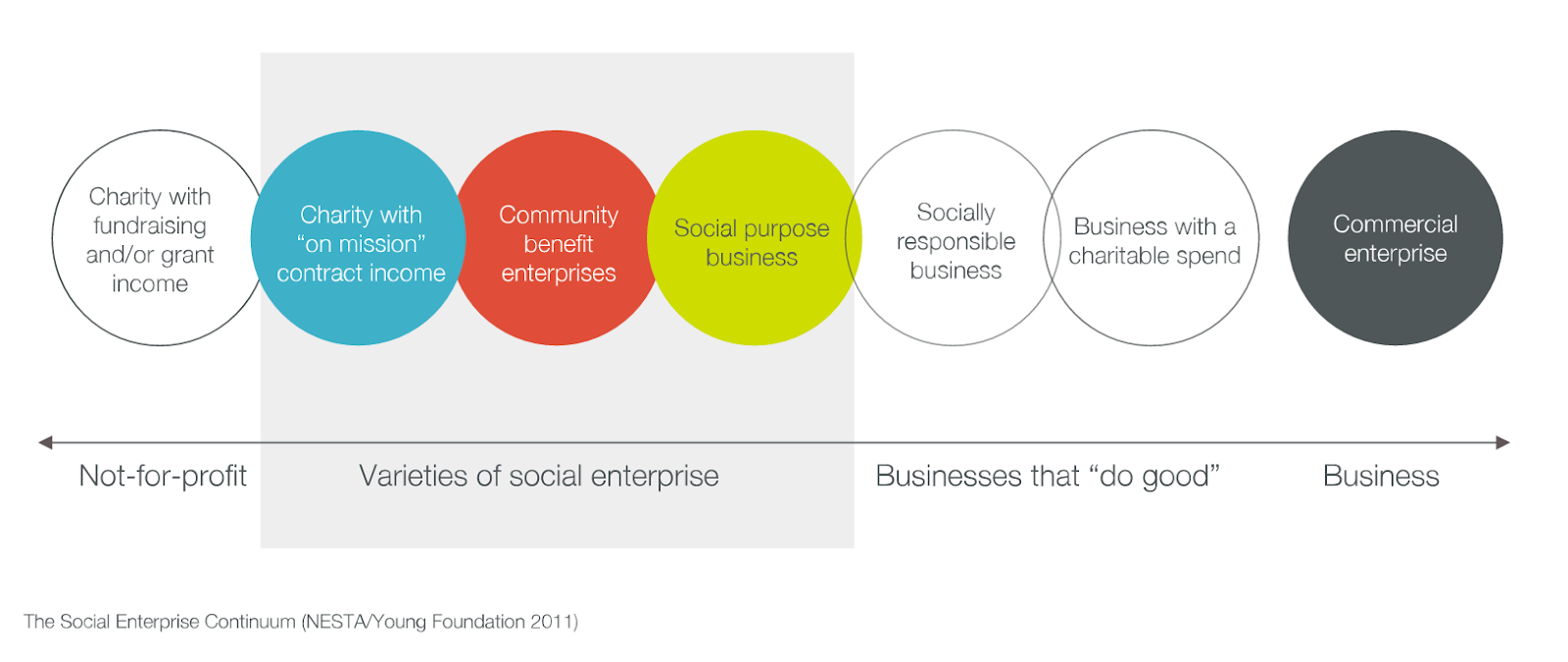
An enterprise can take the form of creating a community and connecting with like minded people. Taking the ideas and creating a business from it.
We then went onto our collaborative task. Collaborative task:
What are the knowledge, skills and aptitudes these students have developed through enterprise?
What learning happened?
Some of the things that came up were?
Aptitudes: Can do attitude
Skills: Networking promoting the product.
Trial and error.
Having a vision and goal.
Working collaboratively with others.
Today on a Saturday morning session at Mind lab we started with a task where we had to find "Where's George Siemens" was. This was an interesting task for those of us who did not know much about this person. We had to use the internet to find out where he might be right now. We used a range of social media such as twitter, wikipedia, and you tube to find out latest information about this man and where he was.
For those that are reading my blog and do not know who George Siemen's is here is a little bit of information about this man.
George Siemens is a writer, theorist, speaker, and researcher on learning, networks, technology, analytics and visualization, openness, and organizational effectiveness in digital environments.[1] He is the originator of Connectivismtheory and author of the article Connectivism: A Learning Theory for the Digital Age and the book Knowing Knowledge
We then talked about if anyone in the group emerged as a leader in regards to this class activity.
In what ways?
If not, why not?
I found this task very interesting as I did not know much about this man and I found that the very first place that I went to find information about him was on google search and from there, Wikipedia. I then, because the task asked to find out where he could be right now, I retreated to social media such as his twitter feed and also you tube or his personal blog.
Next, we then went onto talking about Leadership and our mind lab leadership assignment 1.
Leadership is very board. Assessment 1: Leadership
In this video it talked about the 10 best known leadership theories. I have listed these below.
The great man theory.
The trait theory of leadership.
The skills theory of leadership.
The style based theory of leadership.
The situational leadership skills.
Contengency theory.
Transactional leadership.
Transformational leadership.
Leader-member exchange theory.
Servant leadership theory.
We then went onto doing our collaborative task where we had to explore one leadership theory. Here are some that we had to choose from. Our group chose to do Maori Leadership . I personally related to this as majority of my class are from a Maori background.
Servant leadership
Pedagogical leadership.
Transactional leadership.
Transformational leadership.
Maori leadership.
We had to then Identify some key aspects of this leadership theory create a set of resources. i have included our groups collaborative task on Maori Leadership below.
We then went onto looking at leadership theory VS Leadership style.
Leadership theory VS Leadership style.
How do they relate to practice
Is there one approach to leadership that would work in every situation?
Style: How you apply that theory and work in practice.
We were asked to do a leadership quiz to find out what leadership style we fitted into. I have included my results below. My leadership style which was participative style with fitted in with the famous Nelson Mandela. WHOOP!WHOOP!! He is an amazing man.
Leadership Quiz reflection results:
Your score is:
Authoritarian 27
Procedural 24
Transformational 42
Participative 44
Laissez Faire 35
Note down your scores then see below.
Theories
Servant leasdership
Pedagogical leadership.
Transactional
transformational
Maori medium
Styles:
Visionary
affilitive
pacesetting
coaching
democratic
commanding
Atrributes:
Key competencies
21st centuries skills
Growth mindset
Adaptive competence
Emotional intelligence.
Character qualities (world economic forum)
These are the things that we need to look at and reflect on in our leadership assignment 1(as per above).
We then looked at Emotional Intelligence. I have included a video below.
In this video is talked about these 3 emotional intelligence:
Symapthy
Empathy
Compassion.
Connected learning and connectivism (Digital)
Why connected learning?
Connected learning is when someone is pursuing a personal interest with the support of peers, mentors and caring adults, and in ways that open up opportunities for them. It is a fundamentally different mode of learning than education centered on fixed subjects, one-to-many instruction, and standardized testing.Young people learn best when actively engaged, creating, and solving problems they care about, and supported by peers who appreciate and recognize their accomplishments. Connected learning applies the best of the learning sciences to cutting-edge technologies in a networked world.
Optimal learning for each learner. Discovery, exploring that is driven by real world problems. Connecting learning to real world engagement. Making it more accessible for the students, young people and families.
Whanau concept of knowledge
-Regarded as belonging to the whole group, whanau rather then being individual.
Our task was to create a presentation on what connected learning looks like in our teaching practice.
I have included a link to my piktochart of what connected learning looks like in my practice.
Here is my link. Click on the link to view my connected learning piktochart.
We then looked at Connectivism. Below is a video on what connectivism is.
What is connectivism.
In the theory, learning occurs through connections within networks.
Siemen's Principles of connectivism:
Learning and knowledge rests in diversity of opinions.
Learning is a process of connecting specialized nodes or information sources.
Learning may reside in non-human appliances.
Capacity to know more is more critical than what is currently known
Nurturing and maintaining connections is needed to facilitate continual learning.
Ability to see connections between fields, ideas, and concepts is a core skill.
Currency (accurate, up-to-date knowledge) is the intent of all connectivist learning activities.
Decision-making is itself a learning process. Choosing what to learn and the meaning of incoming information is seen through the lens of a shifting reality. While there is a right answer now, it may be wrong tomorrow due to alterations in the information climate affecting the decision.